

Book Affordable Bus Tickets to Joya de Cerén
Local buses and day-tour shuttles to Joya de Cerén — El Salvador's UNESCO World Heritage Maya site, the 'Pompeii of the Americas'
Why choose Spring Bus?
Spring Bus is the best way to find bus tickets to Joya de Cerén

Plan your perfect trip
Find and book your bus tickets in just a few clicks.

Best prices
We partner with top bus companies to provide you with the best prices available.

Flexible Booking
Change your travel plans as needed with our flexible booking options.
Joya de Cerén is El Salvador's UNESCO World Heritage Maya archaeological site (inscribed 1993) — often called "the Pompeii of the Americas" because of how the eruption of nearby Loma Caldera volcano around 600 AD preserved an entire Maya peasant village under 4-8 meters of volcanic ash. The site is unique in Maya archaeology because where most Maya ruins preserve elite + ceremonial monuments (temple-pyramids, ball courts, royal palaces), Joya de Cerén preserves everyday rural Maya life: farm fields with the actual planted corn + manioc + agave + beans still in the ground, individual houses with cooking pots + ceramics left mid-meal, communal buildings, sweat baths, even footprints and individual finger impressions in the volcanic mud. Discovered in 1976 when a construction worker hit a grain-storage structure with a bulldozer.
Spring Bus connects you to operators running scheduled service to Joya de Cerén. The standard route is Ruta 108 from Terminal de Occidente in western San Salvador — ~40-50 minutes, ~$1 USD, frequent. Or take Ruta 201 toward Santa Ana and get off at the San Juan Opico turnoff (~30 min, ~$1 USD), then a short pickup colectivo to the site (~5 min, ~$0.50). Day-tour shuttles from San Salvador run organized tours combining Joya de Cerén + San Andrés archaeological site (~5 km away, another Maya ceremonial site) — typically $30-50 USD/person for the day. Entry to the site: ~$3 USD (Salvadoran residents) / ~$10 USD (foreign visitors) for both Joya de Cerén + the on-site museum.
Popular routes to Joya de Cerén
Estimated travel time, distance and shared-shuttle fare ranges for the most common routes into Joya de Cerén.
From San Salvador (Terminal de Occidente)
- Duration
- ~40-50 min
- Distance
- 30 km
- Fare (shared shuttle)
- $1 USD bus / $30-50 USD organized day tour
- Frequency
- Ruta 108 + Ruta 201 frequent
From Santa Ana (with transfer)
- Duration
- ~1 h
- Distance
- 35 km
- Fare (shared shuttle)
- $1 – $2 USD
- Frequency
- Connecting buses
From San Andrés ruins (nearby Maya site)
- Duration
- ~15 min
- Distance
- 5 km
- Fare (shared shuttle)
- $0.50 USD
- Frequency
- Pickup colectivo
From Tazumal ruins (Chalchuapa, further west)
- Duration
- ~1 h via Santa Ana
- Distance
- 60 km
- Fare (shared shuttle)
- $2 – $4 USD
- Frequency
- Connecting buses
From Suchitoto (long combined tour)
- Duration
- ~2 h
- Distance
- 80 km
- Fare (shared shuttle)
- $3 – $6 USD
- Frequency
- Tour operator combo
Routes from Joya de Cerén
Direct bus and shuttle service leaving Joya de Cerén for other destinations in El Salvador — tap any route for travel time, fares, operators, and FAQs.
How to get to Joya de Cerén by bus
Joya de Cerén is reached by public bus from San Salvador (the cheap option) or by organized day tour combining the site with San Andrés ruins.
By Ruta 108 from San Salvador
Ruta 108 from Terminal de Occidente (western San Salvador) — ~40-50 minutes, ~$1 USD. Frequent departures. Get off at the Joya de Cerén entrance (the bus stop is signed). The standard route for budget travelers.
Via Ruta 201 toward Santa Ana
Ruta 201 from Terminal de Occidente toward Santa Ana — get off at the San Juan Opico turnoff (~30 min, ~$1 USD), then a pickup colectivo the last 5 minutes to the site (~$0.50 USD). Useful if you're continuing to Santa Ana afterward.
By organized day tour from San Salvador
Day tours combining Joya de Cerén + San Andrés ruins (and sometimes Tazumal further west) — $30-50 USD/person, transport + entry + guide included. Useful for travelers wanting context + a deeper visit. Several operators run these from San Salvador hostels + hotels.
About Joya de Cerén
Joya de Cerén was inhabited by a Maya peasant farming community from ~200 BC to ~600 AD. The village wasn't large — archaeologists estimate ~200 residents living in extended-family compounds. They grew maize, manioc, agave, beans, squash, chili peppers, and cacao in carefully maintained fields. Then around 600 AD, the nearby Loma Caldera volcano erupted suddenly (without prior warning signs the residents could prepare for) — pyroclastic surges + volcanic ash buried the village in 4-8 meters of fine ash within hours. The villagers escaped (no human remains have been found at the site, suggesting they fled in time), but they couldn't take their belongings. The ash preserved the village's organic + perishable materials that normally decay completely in tropical Central America — maize plants still growing in furrows, painted ceramics with food still in them, woven palm mats, individual sandals and clothing fragments, finger impressions in plastered walls.
The site was discovered accidentally in 1976 when a construction worker bulldozing for a grain silo hit one of the buried structures. Excavations began in 1978 + continue today. UNESCO inscribed Joya de Cerén in 1993 because of the site's unique value for understanding everyday Maya peasant life — virtually every other Maya site in Central America preserves elite/ceremonial buildings (temples, palaces, ball courts), so we have detailed knowledge of the elite but limited knowledge of the everyday rural population. Joya de Cerén reverses that — we know the lives of these specific 200 villagers in extraordinary detail. The site is smaller than other Maya sites (~70 buildings identified, ~12 excavated) but the on-site museum is excellent with reconstructions, recovered artifacts, and explanations of daily life. Allow 2-3 hours for a full visit including the museum.
Travel tips for getting to Joya de Cerén
- The site is small (~70 buildings identified, ~12 excavated) — allow ~2-3 hours including the on-site museum.
- Hire a guide at the entrance (~$10-15 USD for English-speaking) — the iconography + agricultural context isn't obvious from signage alone.
- Combine with San Andrés ruins ~5 km away — a Maya ceremonial center with platforms + pyramids. Together they make a half-day cultural visit.
- Open Tuesday-Sunday, 9 AM - 4 PM — closed Mondays. Pre-verify hours; site sometimes closes for maintenance.
- Entry: ~$3 USD residents / ~$10 USD foreign visitors + museum entry included.
- Bring water + sun protection — the site is mostly open + hot midday. Best visits 9-11 AM or 2-4 PM.
Bus to Joya de Cerén — frequently asked questions
What is Joya de Cerén?
El Salvador's UNESCO World Heritage Maya archaeological site (1993) — often called "the Pompeii of the Americas" because Loma Caldera volcano erupted ~600 AD and buried an entire Maya peasant village under 4-8 meters of ash, preserving everyday rural life (farm fields, houses, ceramics, even footprints) in extraordinary detail. Unique because most Maya sites preserve elite monuments rather than peasant life.
How do I get from San Salvador to Joya de Cerén?
Ruta 108 from Terminal de Occidente — ~40-50 minutes, ~$1 USD, frequent. The standard cheap option. Organized day tour ~$30-50 USD/person combines Joya de Cerén with the nearby San Andrés ruins + a guide for context.
Is Joya de Cerén worth visiting?
Yes for travelers interested in Maya archaeology + cultural history, even though the site is smaller + less visually dramatic than Tikal (Guatemala) or Copán (Honduras). The unique value is in what it preserves — everyday rural Maya peasant life rather than elite ceremonial buildings. The on-site museum is excellent. Allow 2-3 hours. Combine with San Andrés ruins ~5 km away.
How long does it take to visit Joya de Cerén?
About 2-3 hours including the on-site museum. The excavated areas (~12 structures) can be walked in ~1 hour; the museum adds another 1-2 hours with reconstructions + artifacts + context. Combining with San Andrés ruins makes it a half-day visit.
Why is Joya de Cerén called the 'Pompeii of the Americas'?
Because, like Pompeii in Italy, a volcanic eruption (Loma Caldera ~600 AD) preserved the site in extraordinary detail — including organic materials (woven mats, maize plants still in fields, food in ceramic dishes) that normally decay in tropical Central America. Unlike Pompeii, no human remains have been found — the villagers fled in time, but their belongings + village life were buried under 4-8 meters of ash + preserved for 1400+ years.
Can I combine Joya de Cerén with other sites?
Yes — the standard combo is with San Andrés ruins ~5 km away (another Maya site, but ceremonial rather than residential). Together they make a half-day cultural visit. Tazumal at Chalchuapa (further west near Santa Ana) is another Maya site that can be added for a full-day tour. Several day-tour operators bundle Joya de Cerén + San Andrés + Tazumal as a single day from San Salvador.
Other destinations in El Salvador
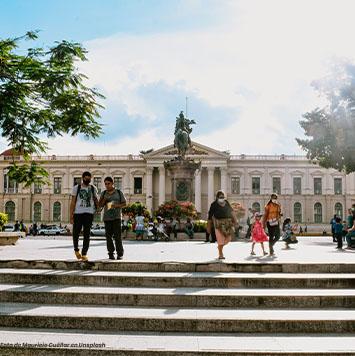 Destination
San Salvador
San Salvador department
El Salvador's capital and the country's main entry point — international airport (SAL) ~45 minutes south, ringed by volcanoes (San Salvador, Boquerón crater), modern districts (Escalón, Zona Rosa) for upscale stays. The transit hub for El Tunco surf, Suchitoto colonial, Santa Ana volcano, and cross-border service to Guatemala and Honduras.
DestinationEl Tunco
La Libertad (Pacific coast)
El Salvador's most popular surf village, ~45 minutes from San Salvador along the Pacific coast. Consistent year-round waves (best April–October), iconic Roca Sunzal rock formation, walkable village of hostels and beachfront bars, the standard backpacker base for the Pacific coast.
DestinationEl Zonte
La Libertad (Pacific coast)
Quieter surf village ~20 minutes west of El Tunco on El Salvador's Pacific coast, known globally as "Bitcoin Beach" since the 2019 community experiment that helped inspire El Salvador's 2021 Bitcoin Legal Tender Law. Consistent surf, mellower vibe than El Tunco.