

Book Affordable Bus Tickets to Bluefields
Nicaragua's Caribbean port of Creole rhythm and the gateway to the Corn Islands.
Why choose Spring Bus?
Spring Bus is the best way to find bus tickets to Bluefields

Plan your perfect trip
Find and book your bus tickets in just a few clicks.

Best prices
We partner with top bus companies to provide you with the best prices available.

Flexible Booking
Change your travel plans as needed with our flexible booking options.
Bluefields is a different Nicaragua altogether — a steamy Caribbean port where Spanish mixes with Creole English, reggae and Palo de Mayo spill from the doorways, and the cultures of Creole, Garifuna, Miskito and Mestizo peoples blend along the waterfront. Named for a Dutch pirate, the town curls around a wide bay rather than the open sea, lined with wooden stilt houses, fishing boats and seafood shacks serving coconut-rich rondón and fresh lobster. There are few classic sights; the draw is the rhythm of coastal life and a music-soaked culture you'll find nowhere else in the country.
Reaching Bluefields is a journey in itself. Spring Bus connects you to operators running the long paved-highway route from Managua (roughly 7 hours) to the river port of El Rama, from where the trip continues by panga boat or onward road to the bay. Bluefields is also the mainland hub for the Corn Islands, reached by an overnight ferry or a short flight (about 5–6 hours by sea or roughly an hour in the air), making it both a destination and a launching point for the Caribbean's clearest water.
Popular routes to Bluefields
Estimated travel time, distance and shared-shuttle fare ranges for the most common routes into Bluefields.
From Managua
- Duration
- ~7 h
- Distance
- ~290 km
- Fare (shared shuttle)
- from $14
- Frequency
- daily
From El Rama
- Duration
- ~2 h (boat)
- Distance
- ~95 km (river)
- Fare (shared shuttle)
- from $7
- Frequency
- frequent pangas
From Juigalpa
- Duration
- ~5 h
- Distance
- ~200 km
- Fare (shared shuttle)
- from $11
- Frequency
- daily
From Corn Islands
- Duration
- ~5–6 h (ferry)
- Distance
- ~70 km (sea)
- Fare (shared shuttle)
- from $12
- Frequency
- few weekly
Routes from Bluefields
Direct bus and shuttle service leaving Bluefields for other destinations in Nicaragua — tap any route for travel time, fares, operators, and FAQs.
How to get to Bluefields by bus
Bluefields lies on the Caribbean coast with no road reaching the town itself, so the trip combines a long highway bus with a final boat leg.
Bus to El Rama, then boat
The classic overland route runs by bus from Managua to El Rama on the newer paved highway, about 7 hours across the country. El Rama is the end of the road; from its dock you continue by panga (fast boat) down the Escondido River to Bluefields, roughly two hours on the water. Time your arrival so you don't miss the last boat. Spring Bus covers the highway leg to El Rama; arrange the river panga at the dock.
From Managua by air
If you'd rather skip the long ride, La Costeña flies small planes from Managua to Bluefields in about an hour, with daily departures. It's the fastest option and a scenic one over jungle and lagoon, though luggage limits are strict and seats fill early. Many travelers fly one way and take the bus-and-boat combination the other to experience both — book the overland legs on Spring Bus.
Onward to the Corn Islands
From Bluefields you can continue to the Corn Islands, the Caribbean's postcard escape. A cargo-and-passenger ferry makes the crossing in roughly 5–6 hours, usually overnight a couple of times a week, while La Costeña flights cover it in about an hour. The ferry is rough and basic but cheap; the flight is quick but limited. Either way, Bluefields is the mainland gateway, so plan a night here to connect.
About Bluefields
Bluefields is the capital of Nicaragua's South Caribbean Autonomous Region (RACCS) and the cultural heart of the country's Atlantic coast. For centuries this was a world apart from Spanish-speaking Pacific Nicaragua — a former British protectorate, the Mosquito Coast, where English-based Creole remains a first language for many and the music, food and faith trace back across the Caribbean rather than to Spain.
The town's great celebration is Palo de Mayo (Mayo Ya!), a month-long May festival of sensual dance, drumming and grinding rhythm that floods the streets with color and sound, drawing visitors from across the country. Year-round, Bluefields hums with reggae, soca and church-choir gospel. It isn't polished for tourism — expect heat, rain and rough edges — but for travelers curious about Afro-Caribbean Nicaragua, no other place comes close.
Travel tips for getting to Bluefields
- Plan a buffer day — the bus-and-boat trip is long and weather or missed connections can stretch it, so don't schedule tightly.
- Book Corn Islands transport ahead since ferries run only a few times a week and La Costeña flights sell out fast.
- Bring cash in córdobas; ATMs exist in town but can be unreliable, and the boats and pangas are cash-only.
- Pack for heat and rain — Bluefields is humid year-round, so quick-dry clothes and a rain layer beat anything heavy.
- Visit in May for Palo de Mayo if you want the festival, but expect packed boats and full guesthouses.
- Try the local rondón and coconut bread at a waterfront comedor — Caribbean Creole cooking is the real highlight here.
Bus to Bluefields — frequently asked questions
How do I get to Bluefields from Managua?
Take a bus on the paved highway from Managua to El Rama — about 7 hours — then continue by panga boat down the Escondido River for roughly two hours to Bluefields, since no road reaches the town. Alternatively, La Costeña flies the route in about an hour. Book the highway leg on Spring Bus.
Is Bluefields the way to reach the Corn Islands?
Yes — Bluefields is the mainland gateway. From here a passenger ferry crosses to the Corn Islands in about 5–6 hours, running only a few times a week, while La Costeña flights make it in roughly an hour. Plan to overnight in Bluefields to catch your connection comfortably.
What is Bluefields known for?
Its Afro-Caribbean Creole culture and the Palo de Mayo (Mayo Ya!) festival each May — a month of dance, drumming and reggae rhythm. Bluefields blends Creole, Garifuna and Miskito traditions, with English-based Creole widely spoken, making it culturally distinct from Pacific Nicaragua.
Are there beaches in Bluefields?
Bluefields itself sits on a sheltered bay rather than open sea, so it has no postcard beaches — those are out on the Corn Islands, a ferry or flight away. The town's appeal is its culture, music, seafood and role as the Caribbean coast's main hub and launching point.
How long does the trip to Bluefields take?
Overland, plan a full day: about 7 hours by bus to El Rama plus two hours by river panga. Weather and missed connections can add time, so leave a buffer. Flying from Managua with La Costeña cuts it to roughly an hour but with strict luggage limits.
Other destinations in Nicaragua
 Destination
Managua
Managua department
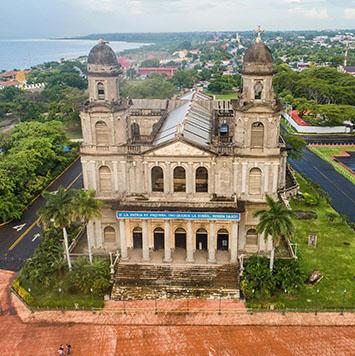
Nicaragua's capital, less touristy than Granada or León but the main international gateway via Augusto C. Sandino International Airport (MGA). Most travelers transit through to Granada (~45 min) or León (~2 h). Unusual decentralized layout (no traditional downtown) because of the 1972 earthquake. La Costeña flights to the Corn Islands depart from here.
DestinationGranada
Granada (Lake Nicaragua)
Nicaragua's most-visited colonial city, founded in 1524 and one of the oldest Spanish-built cities in mainland Americas. Sits on the shores of Lake Nicaragua at the base of Mombacho Volcano, ~45 minutes from Managua. Famous colorful colonial center around the Cathedral and Calle La Calzada, boat trips through Las Isletas, and a strong Spanish-school scene.
DestinationLeón
León
Nicaragua's revolutionary university city ~2 hours from Managua, famous for the UNESCO-listed Cathedral of León (the largest in Central America), revolutionary Sandinista murals across the city, and the famous Cerro Negro volcano boarding adventure (sliding down an active volcano on a wooden board). More authentic and less polished than colonial rival Granada.