

Book Affordable Bus Tickets to Somoto
Gateway to the Somoto Canyon — hiking, swimming and rock-jumping in a river gorge.
Why choose Spring Bus?
Spring Bus is the best way to find bus tickets to Somoto

Plan your perfect trip
Find and book your bus tickets in just a few clicks.

Best prices
We partner with top bus companies to provide you with the best prices available.

Flexible Booking
Change your travel plans as needed with our flexible booking options.
Somoto is a quiet highland town in the department of Madriz, set in the cool, rugged hills of northern Nicaragua close to the Honduran border. For most travelers its name is shorthand for one thing: the Somoto Canyon (Cañón de Somoto), a narrow river gorge where sheer rock walls plunge into the emerald Río Coco. Guided trips through the canyon mix hiking, wading, swimming and rock-jumping with floating stretches between towering cliffs, making it one of the country's standout adventure outings. The town itself is small and friendly, with a pleasant central plaza, good local rosquillas, and a calm pace that contrasts with the thrill of the gorge.
Somoto sits on the Pan-American Highway, the main artery north toward the Honduras frontier at Las Manos, so it's well served by buses. Spring Bus connects you to operators running services from Estelí (about 1.75 hours), the largest northern hub, and onward from Managua (roughly 3.5 hours via Estelí). From Somoto's bus terminal it's a short ride out to "el cañón" — the canyon entrance and visitor area — where local guides and boat operators arrange tours of varying lengths and difficulty.
Popular routes to Somoto
Estimated travel time, distance and shared-shuttle fare ranges for the most common routes into Somoto.
From Estelí
- Duration
- ~1.75 h
- Distance
- ~80 km
- Fare (shared shuttle)
- from $4
- Frequency
- frequent
From Managua
- Duration
- ~3.5 h
- Distance
- ~215 km
- Fare (shared shuttle)
- from $9
- Frequency
- several daily
From Ocotal
- Duration
- ~40 min
- Distance
- ~25 km
- Fare (shared shuttle)
- from $2
- Frequency
- frequent
From León
- Duration
- ~3.5 h
- Distance
- ~210 km
- Fare (shared shuttle)
- from $9
- Frequency
- daily
Routes from Somoto
Direct bus and shuttle service leaving Somoto for other destinations in Nicaragua — tap any route for travel time, fares, operators, and FAQs.
How to get to Somoto by bus
Somoto lies on the Pan-American Highway in the far north, easily reached by bus via the regional hub of Estelí.
Via Estelí
The simplest route north is through Estelí, the main city of the highlands. Frequent buses run the Pan-American Highway from Estelí to Somoto in about 1.75 hours, with the road climbing through pine-covered hills and tobacco country. Estelí itself connects easily to Managua and León, so it makes a natural transfer point. Book your leg to Somoto on Spring Bus, and aim to arrive by midday to fit in a canyon tour.
From Managua
Direct and connecting services run from Managua to Somoto in roughly 3.5 hours up the Pan-American Highway, usually via Estelí. Express northbound buses bound for the Las Manos border with Honduras pass through or near Somoto, so it's an easy stop. If you're crossing into or out of Honduras, Somoto and the canyon make a worthwhile detour — confirm whether your service stops in town or only at the highway junction.
To the canyon
The Somoto Canyon entrance sits a few kilometers outside town along the highway toward the Honduras border. From Somoto's terminal, take a short local bus, taxi or any northbound service and ask to be dropped at "el cañón." At the visitor area, registered community guides and boat operators arrange tours from gentle half-day floats to full-day hiking-and-jumping routes. Go in the morning, and arrange your return pickup, as transport thins out later.
About Somoto
Somoto is the capital of Madriz, one of Nicaragua's smallest and least-visited departments, tucked into the northern highlands near Honduras. It's an old colonial town with a tidy central plaza and a famous regional treat — rosquillas, baked corn-and-cheese rings sold in bags along the road and shipped across the country. The cooler highland climate and slow rhythm make it a refreshing change from the hot lowlands.
The town leapt onto the tourist map after 2004, when geologists exploring the gorge confirmed the scale of the Cañón de Somoto, carved by the upper Río Coco — Central America's longest river — through walls of rock up to 160 meters high. Local families organized into guiding cooperatives, and today canyon tourism is the area's economic engine, offering a genuine community-run adventure that keeps Somoto firmly on the northern travel circuit.
Travel tips for getting to Somoto
- Go in the morning to give yourself time for a full canyon tour and to catch return transport before it thins out.
- Hire a registered community guide at the canyon entrance — the gorge has currents and jumps that aren't safe to explore alone.
- Wear quick-dry clothes and secure footwear that can get wet, since tours mix hiking, wading and swimming.
- Bring a dry bag for your phone, money and a change of clothes — most of the route involves water.
- Visit in the dry season (roughly December–April) for clearer, calmer water; rains can swell the river and limit access.
- Pick up rosquillas in town — Somoto's baked corn-and-cheese rings are the region's famous snack for the road.
Bus to Somoto — frequently asked questions
How do I get to Somoto by bus?
Travel up the Pan-American Highway via Estelí, the northern hub. Frequent buses cover Estelí to Somoto in about 1.75 hours, while services from Managua take roughly 3.5 hours, usually via Estelí. Northbound buses toward the Las Manos Honduras border also pass through. Book your leg on Spring Bus.
What is the Somoto Canyon and can I swim there?
The Cañón de Somoto (Somoto Canyon) is a dramatic river gorge on the upper Río Coco, with rock walls up to 160 meters high. Tours combine hiking, wading, swimming and rock-jumping, with stretches you float through between cliffs. Swimming is the heart of the experience — go with a registered guide for safety.
How do I get from Somoto town to the canyon?
The canyon entrance is a few kilometers outside town toward the Honduras border. From Somoto's terminal, take a short local bus, taxi or northbound service and ask for "el cañón." At the visitor area, community cooperatives arrange guides and boats. Go in the morning and confirm your return ride, as transport thins out.
When is the best time to visit Somoto Canyon?
The dry season, roughly December to April, offers the clearest, calmest water and the safest conditions for swimming and jumping. During the rainy months the Río Coco can swell, making currents stronger and sometimes limiting access. Whatever the season, always go with a registered local guide.
Is Somoto worth a stop if I'm crossing to Honduras?
Yes — Somoto sits right on the route to the Las Manos border, so the canyon makes an easy detour for travelers heading into or out of Honduras. A half-day tour fits comfortably around a border crossing, and the cool highland town with its famous rosquillas is a pleasant break from the highway.
Other destinations in Nicaragua
 Destination
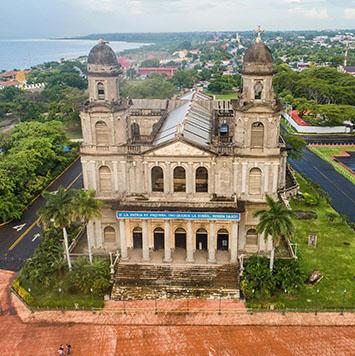
Managua
Managua department
Nicaragua's capital, less touristy than Granada or León but the main international gateway via Augusto C. Sandino International Airport (MGA). Most travelers transit through to Granada (~45 min) or León (~2 h). Unusual decentralized layout (no traditional downtown) because of the 1972 earthquake. La Costeña flights to the Corn Islands depart from here.
DestinationGranada
Granada (Lake Nicaragua)
Nicaragua's most-visited colonial city, founded in 1524 and one of the oldest Spanish-built cities in mainland Americas. Sits on the shores of Lake Nicaragua at the base of Mombacho Volcano, ~45 minutes from Managua. Famous colorful colonial center around the Cathedral and Calle La Calzada, boat trips through Las Isletas, and a strong Spanish-school scene.
DestinationLeón
León
Nicaragua's revolutionary university city ~2 hours from Managua, famous for the UNESCO-listed Cathedral of León (the largest in Central America), revolutionary Sandinista murals across the city, and the famous Cerro Negro volcano boarding adventure (sliding down an active volcano on a wooden board). More authentic and less polished than colonial rival Granada.