

Book Affordable Bus Tickets to San Carlos
The river gateway to El Castillo, Solentiname and the Río San Juan.
Why choose Spring Bus?
Spring Bus is the best way to find bus tickets to San Carlos

Plan your perfect trip
Find and book your bus tickets in just a few clicks.

Best prices
We partner with top bus companies to provide you with the best prices available.

Flexible Booking
Change your travel plans as needed with our flexible booking options.
San Carlos stands at the wild southeastern corner of Lake Nicaragua, the bustling river port where the lake narrows and the historic Río San Juan begins its run toward the Caribbean. It's a working town of docks, boats and market stalls rather than a polished resort — but its position makes it the indispensable hub for one of the country's most remote and rewarding regions. From the San Carlos waterfront, boats fan out to the Solentiname archipelago, the riverside fortress town of El Castillo, and the vast rainforest of the Indio Maíz Biological Reserve.
Getting here is part of the adventure. Spring Bus connects you to operators running the long overland route from Managua (about 7 hours by road), winding south and east toward the lake's far shore, while La Costeña flies the same trip in roughly an hour for those short on time. Once in San Carlos, river travel takes over: a boat to El Castillo runs about 2.5 hours upriver, and pangas reach the painted island communities of Solentiname, making the town your base camp for the Río San Juan.
Popular routes to San Carlos
Estimated travel time, distance and shared-shuttle fare ranges for the most common routes into San Carlos.
From Managua
- Duration
- ~7 h
- Distance
- ~290 km
- Fare (shared shuttle)
- from $13
- Frequency
- daily
From Juigalpa
- Duration
- ~5 h
- Distance
- ~190 km
- Fare (shared shuttle)
- from $10
- Frequency
- daily
From El Castillo
- Duration
- ~2.5 h (boat)
- Distance
- ~60 km (river)
- Fare (shared shuttle)
- from $6
- Frequency
- few daily
From Solentiname
- Duration
- ~1.5 h (boat)
- Distance
- ~35 km (lake)
- Fare (shared shuttle)
- from $5
- Frequency
- few weekly
Routes from San Carlos
Direct bus and shuttle service leaving San Carlos for other destinations in Nicaragua — tap any route for travel time, fares, operators, and FAQs.
How to get to San Carlos by bus
San Carlos sits at a remote corner of Lake Nicaragua, reached by a long highway bus, a domestic flight, or a lake boat.
Overland bus from Managua
The main route is the long bus from Managua to San Carlos, around 7 hours on partly rough roads curving down the eastern side of Lake Nicaragua. Express and ordinary services run daily; the express is well worth the small extra fare for the time saved. It's a tiring but scenic haul through cattle country and lakeshore. Book the Managua leg on Spring Bus, and bring snacks and water for the ride.
By air with La Costeña
If you'd rather not spend a day on the bus, La Costeña operates small-plane flights from Managua to San Carlos in about an hour, several times a week. It's the quickest way in and out, with views over the lake and rainforest, but seats and luggage allowances are limited, so book ahead. Many travelers fly one direction and take the overland route the other to see the countryside.
Onward by river and lake boat
San Carlos is where wheels give way to water. From the municipal dock, public pangas and slower lanchas head upriver to El Castillo (about 2.5 hours) and across the lake to the Solentiname Islands (around 1.5 hours, on a limited schedule). Boats to the El Castillo and the Indio Maíz region run several times daily, while Solentiname services are sparser — check departure times at the dock and plan your nights around them.
About San Carlos
San Carlos is the capital of the Río San Juan department, Nicaragua's southern frontier with Costa Rica and one of its least-visited corners. The town has a long, turbulent history: the river was once a coveted trans-isthmus route between the Caribbean and the Pacific, fought over by Spanish colonists, British forces and pirates, and later eyed as a possible canal. The lakeside fort at nearby El Castillo still guards that storied waterway.
Today San Carlos is the gateway to extraordinary nature. Downriver lies the wildlife-rich Indio Maíz Biological Reserve, one of Central America's largest tracts of rainforest, while out in the lake the Solentiname Islands are famous for their primitivist painters and birdlife. The town itself is functional rather than pretty, but it's the essential staging post — stock up, sleep, and catch the morning boat into the wild.
Travel tips for getting to San Carlos
- Take the express bus from Managua over the ordinary one — the extra fare saves real hours on the long haul.
- Plan around boat schedules for El Castillo and Solentiname, which depart only a few times a day, mostly mornings.
- Carry passport and cash — you're near the Costa Rica border, ATMs are scarce, and river boats are cash-only.
- Pack rain gear and bug spray for the humid river climate and the rainforest reserves downstream.
- Consider flying one way with La Costeña to save a day, and bus the other to see the lakeshore countryside.
- Stock up in San Carlos on snacks, water and supplies before heading into El Castillo or Indio Maíz, where shops are basic.
Bus to San Carlos — frequently asked questions
How do I get to San Carlos, Nicaragua?
Take the bus from Managua to San Carlos, about 7 hours down the eastern side of Lake Nicaragua, choosing the express service if available. Alternatively, La Costeña flies the route in roughly an hour, several times a week. Book the overland leg on Spring Bus and reserve flights ahead, as seats are limited.
How do I reach El Castillo from San Carlos?
From the San Carlos dock, take a river boat (panga or lancha) up the Río San Juan to El Castillo, a trip of about 2.5 hours. Boats depart several times daily, mostly in the morning. El Castillo's Spanish fortress and rapids make it the region's highlight, with no road access — the river is the only way in.
What can I do around San Carlos?
San Carlos is the gateway to the Río San Juan region: the riverside fort town of El Castillo, the painters' Solentiname Islands on the lake, and the rainforest Indio Maíz Biological Reserve downriver. The town itself is a practical hub, but it opens onto some of Nicaragua's wildest, most rewarding nature.
Is it worth flying instead of taking the bus?
It depends on your time. The La Costeña flight from Managua takes about an hour versus around 7 hours by bus, with scenic lake-and-jungle views, but seats and luggage are limited and it costs more. Many travelers fly one way and bus the other to enjoy both the speed and the scenery.
Do I need anything special near the Costa Rica border?
San Carlos sits close to the Costa Rica frontier, so carry your passport even if you're not crossing, as checks happen on the river. Bring enough cash in córdobas, since ATMs are scarce and unreliable here and all the river boats and small lodges are cash-only.
Other destinations in Nicaragua
 Destination
Managua
Managua department
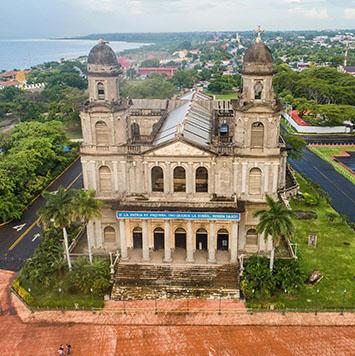
Nicaragua's capital, less touristy than Granada or León but the main international gateway via Augusto C. Sandino International Airport (MGA). Most travelers transit through to Granada (~45 min) or León (~2 h). Unusual decentralized layout (no traditional downtown) because of the 1972 earthquake. La Costeña flights to the Corn Islands depart from here.
DestinationGranada
Granada (Lake Nicaragua)
Nicaragua's most-visited colonial city, founded in 1524 and one of the oldest Spanish-built cities in mainland Americas. Sits on the shores of Lake Nicaragua at the base of Mombacho Volcano, ~45 minutes from Managua. Famous colorful colonial center around the Cathedral and Calle La Calzada, boat trips through Las Isletas, and a strong Spanish-school scene.
DestinationLeón
León
Nicaragua's revolutionary university city ~2 hours from Managua, famous for the UNESCO-listed Cathedral of León (the largest in Central America), revolutionary Sandinista murals across the city, and the famous Cerro Negro volcano boarding adventure (sliding down an active volcano on a wooden board). More authentic and less polished than colonial rival Granada.